

Witnessing Gaza – Journal 2
The Fine Details
With my trusted translator Walid beside me, I was already bracing myself before each call connected. There was a tightness in my chest I couldn’t name yet. A low, anticipatory dread. I understood the headlines and the scale. What I did not yet understand were the fine details - the quiet psychological pressure, the way trauma settles into the body long before it explodes into grief, how tension becomes the baseline, how suffering accumulates through sound, waiting, and the absence of rest.
From the very beginning, the Zanana - what they call the massive war-drone haunting their skies - was constant. I could hear a sharp mechanical hum cutting through every sentence. It caused a headache within minutes. They would mute their mics out of embarrassment, apologizing for something being done to them. I asked them, “please - open your mic. Let us suffer with you.” If this sound was carving itself into their nervous systems, then it should not be hidden from the world.
In those early days, they barely spoke of personal losses at all. They spoke instead about their families, friends, coworkers, & faith. They spoke about the cruelty being inflicted on their people as a whole, but resisted centering themselves. Their voices were careful, they used measured-sentences delivered through tight jaws, and held long pauses - the sound of people monitoring themselves in real time.
When they did speak about themselves - loss was shared, never individualized. Grief was carried collectively. I had never seen solidarity like this in my life. It extended even to the dead. Men carried bodies they had never known, and they did it with dignity and pride. They did it because in Palestine - no child belongs to only one family.
This was jarring to witness as someone raised in the West, where suffering is often isolated and privatized. Narratives flattened Palestinians into abstractions, stripped of tenderness and interior life. What I encountered instead were people who were humble, restrained, deeply proud, and fiercely protective of one another, even as everything around them collapsed.
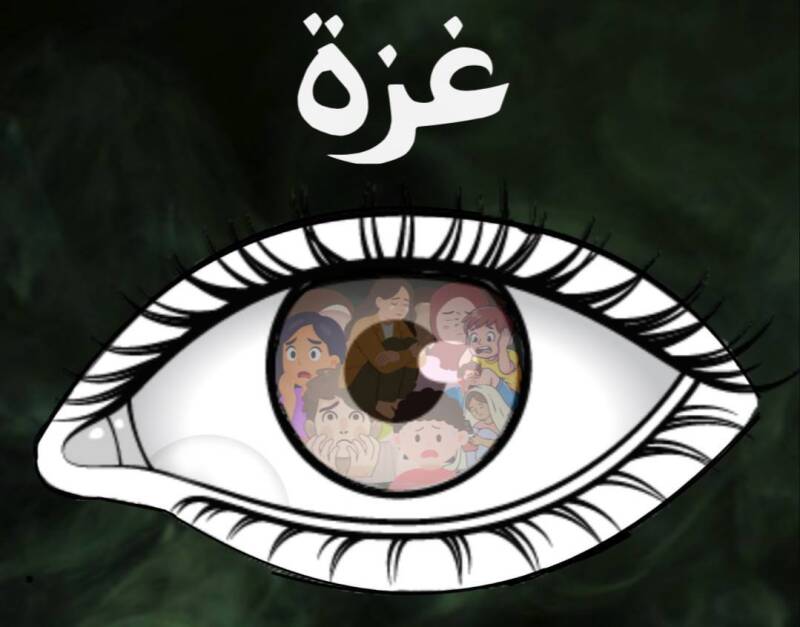
The children understood that what was happening was not normal. They could see other children on their screens living ordinary lives. Their parents tried to shield them, to soften the edges, to preserve something resembling childhood. What can a parent truly protect a child from when bombs fall day and night, when gunfire echoes without pause, when the drone never stops, and when children are already being killed?
In two weeks, families were struggling for electricity, then for food, then for water. This was not months into catastrophe. This was still just the beginning.
Over time, it became impossible to separate the events from the people, or the violence from the way it settled into their voices, their sudden pauses, their shortness of breath.
I wish I had found a way to force the world to look more closely, before lies filled the silence and dehumanization became acceptable.
One image plays on repeat in my memories. A father sitting just off-camera, his hand resting on his child’s back while the child slept, his fingers moving in small, rhythmic circles as bombs sounded in the distance. No words. No performance. Just a quiet, deliberate act of care, repeated as if it might hold the world together for one more night.
Those details stayed with me. They are the part of Gaza that refuses to disappear, even when the world scrolls past. This is what God blessed me to witness, and the reason I cannot reduce this to numbers or headlines.
The fine details are where the truth was, and where my responsibility began.
@AmyraCull
This story is only beginning…
#Gaza #Palestine #Genocide
Verified Aid Requests
Nobody is Free Until Everybody is Free
Add comment
Comments