

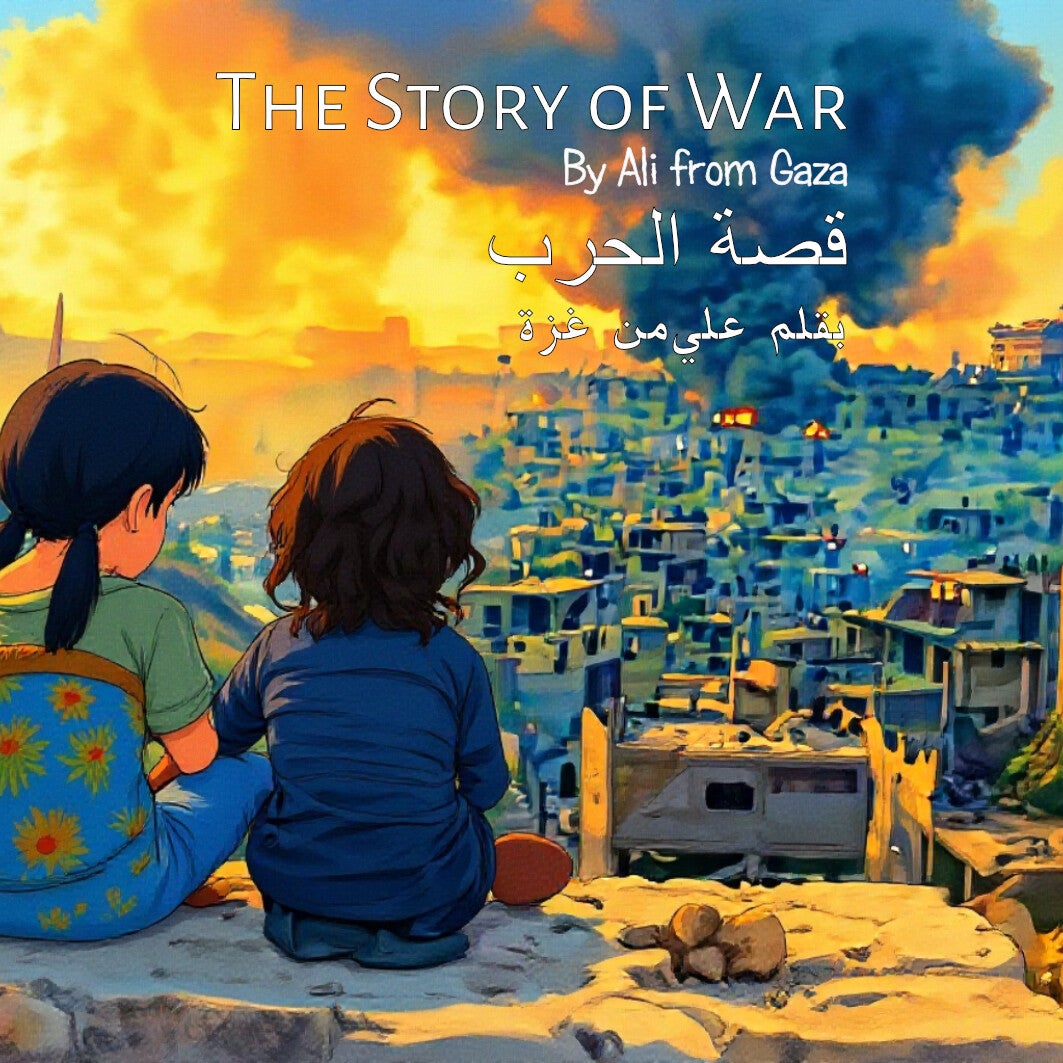
The Story of War by Ali from Gaza

The Story of War by Ali from Gaza
At just 13 years old, Ali's life in Gaza was defined by dreams and the simple routine of childhood. Then came the war. This powerful, real-life account follows Ali as he navigates a world violently reshaped by conflict. With a painful, crushing loss, his dreams are shattered, his home is gone, and he is thrust into the harsh reality of displacement. This is an essential and deeply human portrait of a young life utterly transformed by crisis—a story that will stay with you long after the final page.
Once your payment has been successfully processed, you’ll be able to download a PDF file containing the required passwords and instructions to access the page and the book.
A book review by Deepak Rathna Muniraju
The Story of War
By Ali from Gaza
Crafts4Palestine
This book is not entertainment.
It is testimony.
The Story of War is written by Ali, a 13-year-old boy from Gaza. In spare, unadorned language, he recounts the sudden arrival of war — a scale of destruction so abrupt and total that there was no time to comprehend it before life, as he knew it, collapsed.
Ali writes of a childhood lived under a constant, quiet gloom — a tension that had always existed — but nothing prepared them for the sudden spike into annihilation. What was once a fragile equilibrium of family, safety, and small joys gave way to devastation that words struggle to hold.
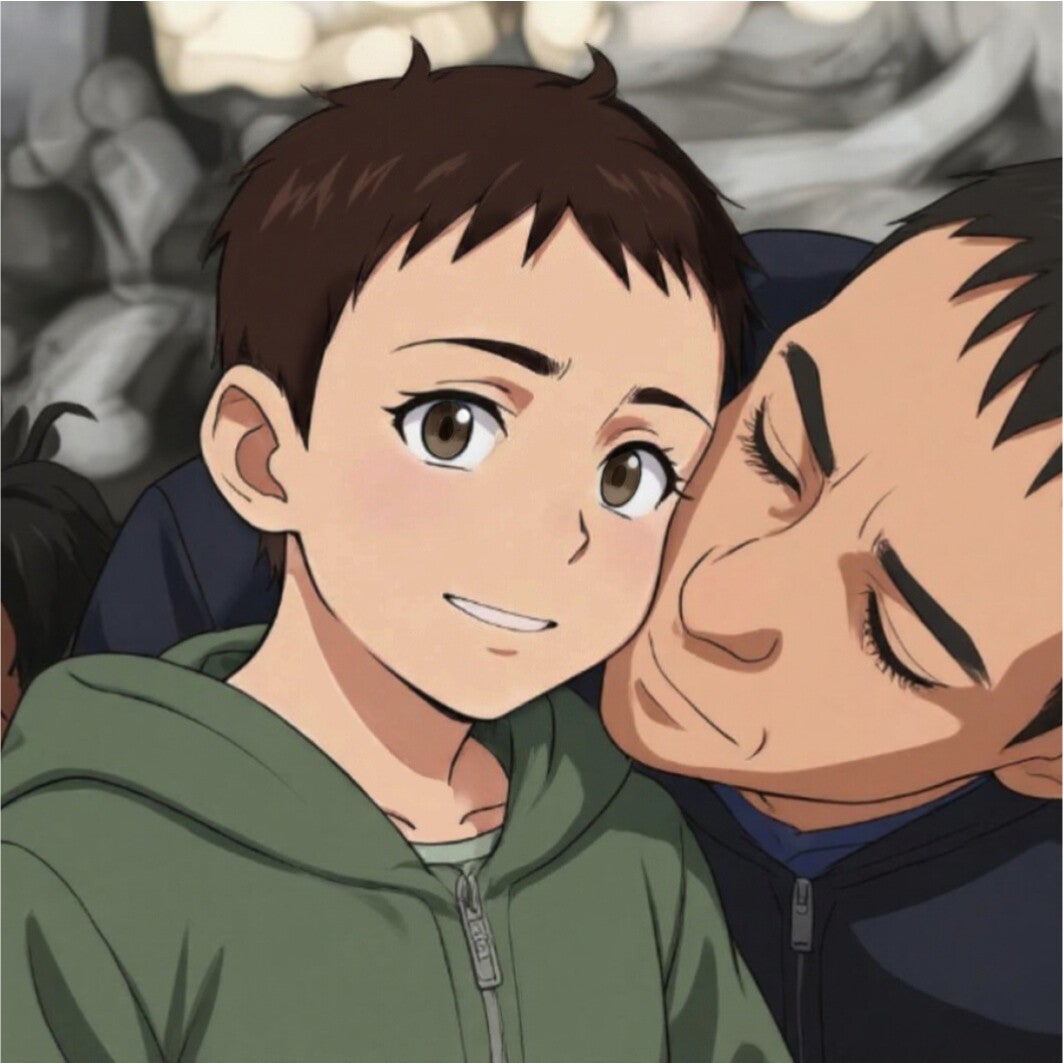
At the heart of this book is Ali’s loss of his father — not only a parent, but his best friend, his constant support, the center of his world. The war took from him the person he loved most. Even a year later, Ali writes that nothing has filled that absence. He still cries. That grief remains raw, unresolved, and painfully alive.
Ali’s words are direct, unfiltered, and devastating in their simplicity. There is no performance here. No attempt to persuade. No appeal crafted for sympathy. What we read is the shock, pain, and trauma of a child’s inner world laid bare — honest, vulnerable, and deeply unsettling.
The book juxtaposes Ali’s raw narrative with vivid illustrations by Samira Anwar, whose imagery captures the emotional and psychological landscape of a child in trauma with remarkable sensitivity. Her artwork does not dramatize suffering; it gives form to it — allowing the reader to feel the silence, fear, and dislocation that Ali describes in words.
This is a rare work that belongs, unquestionably, in the canon of children’s literature — not because it is comforting, but because it is true. It is not a story about a victim; it is a first-hand account by one. A child who has lost his father, his home, his sense of future — and who is still learning how to exist in the aftermath.
How does one judge a book like this?
It is a mirror of our present moment — often ignored, deliberately unseen, too uncomfortable to engage with, too easy to look away from. But to read this book is not a passive act. It is an act of witnessing. Of acknowledgment. Of choosing to see a life that the world has largely learned to unsee.
The Story of War asks for no pity.
It asks for recognition.
In a world distracted by false dazzle and selective empathy, this book insists on presence — on looking directly into the shadows of our time and refusing to turn away.
That, perhaps, is its greatest power.