

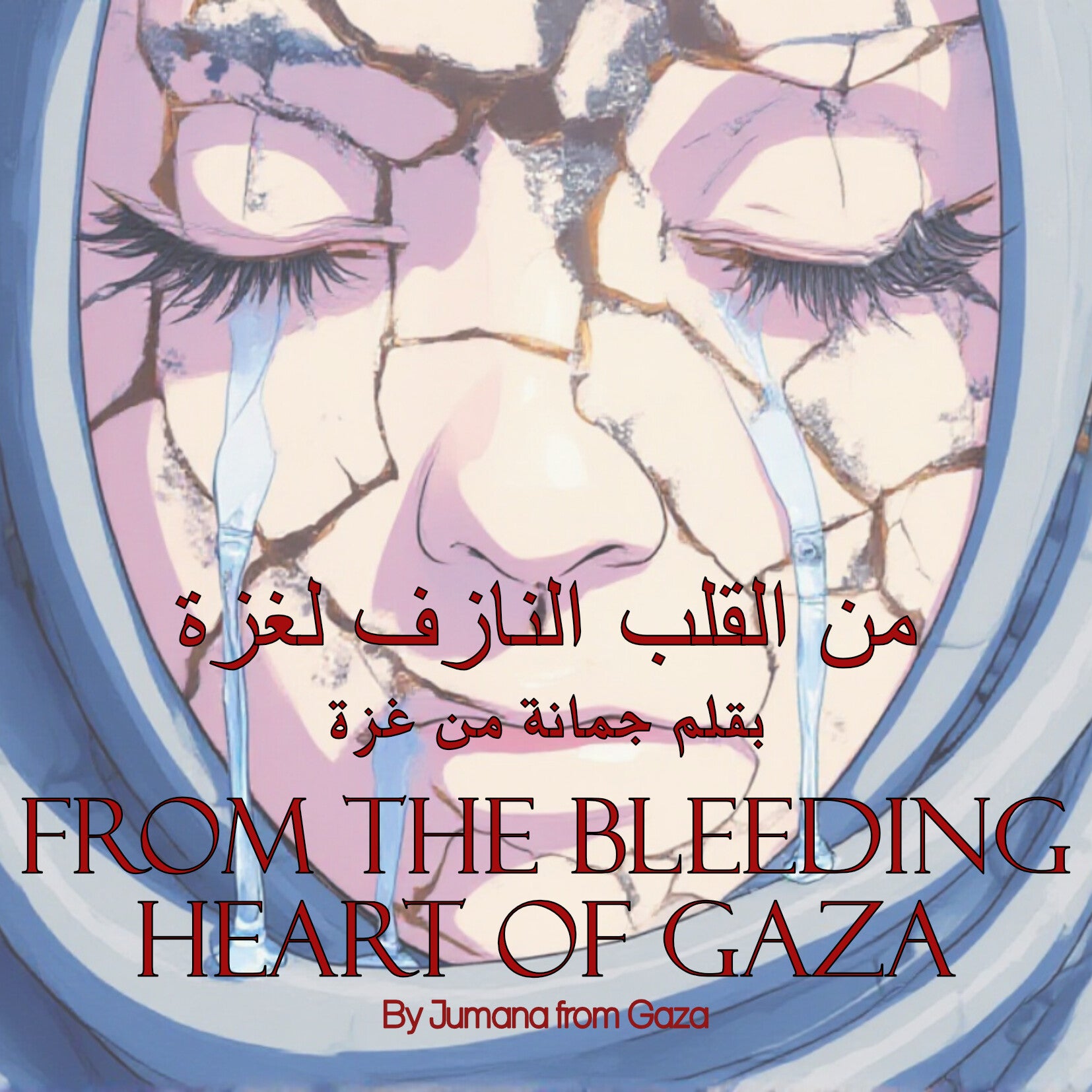
From the Bleeding Heart of Gaza - By Jumana from Gaza

In her own words, a powerful testament to survival.
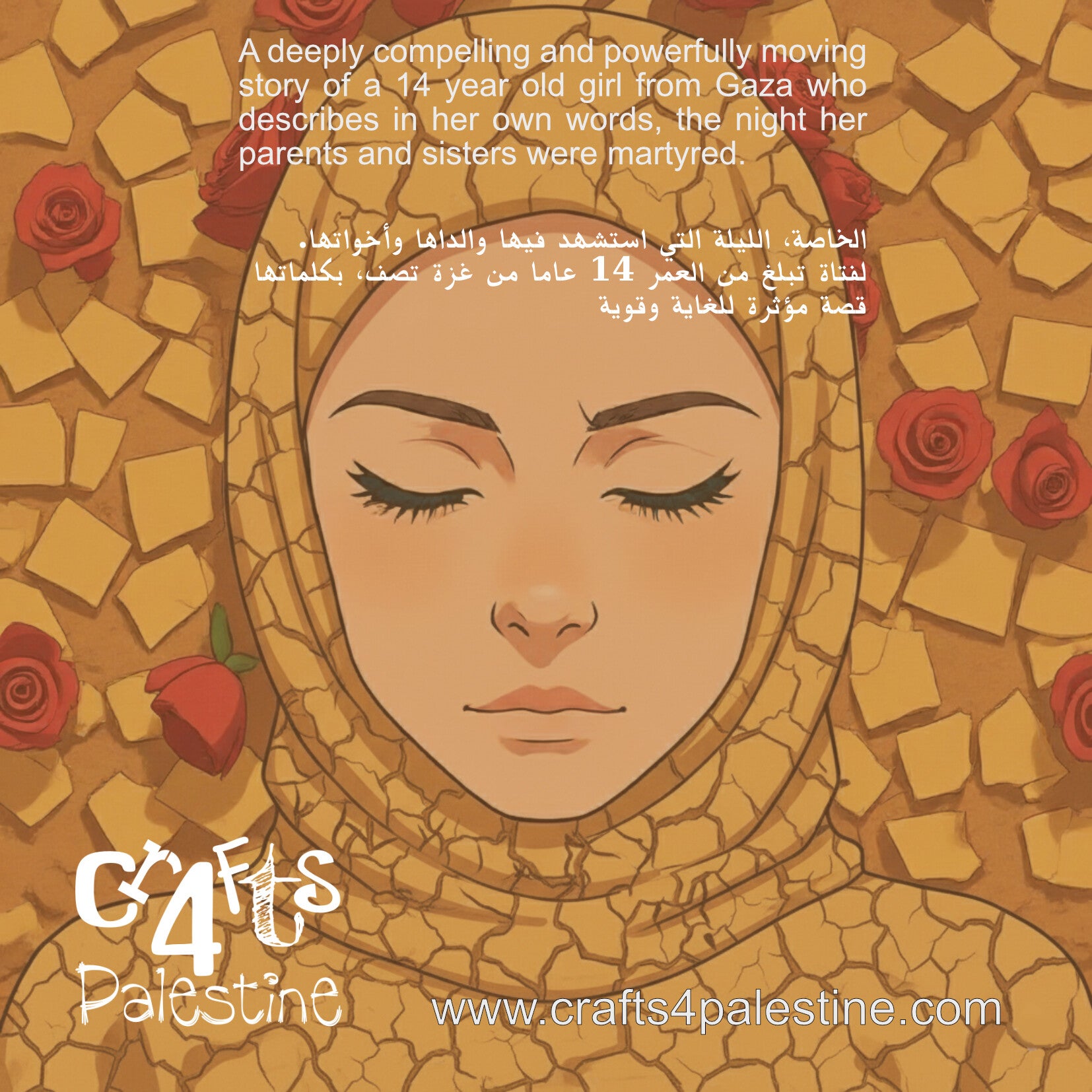
Fourteen-year-old Jumana offers a deeply compelling and profoundly moving account from the heart of Gaza. In the stark, unforgettable language of a young witness, she recounts the devastating night when conflict shattered her world, claiming the lives of her parents and sisters. This is not just a story of loss; it is a raw, intimate, and ultimately unforgettable journey into the resilience of the human spirit amidst unimaginable tragedy. A memoir that must be read.
Once your payment has been successfully processed, you’ll be able to download a PDF file containing the required passwords and instructions to access the page and the book.
A book review by Deepak Rathna Muniraju
From the Bleeding Heart of Gaza
By Jumana from Gaza
Crafts4Palestine
Nothing prepared me for From the Bleeding Heart of Gaza by Jumana.
I was not ready for the ferocity of tragedy as seen through a child’s eyes — not imagined, not interpreted, but lived.
I have read thousands of works across literature and children’s literature — one of the genres closest to my heart. Yet the intensity with which this fragile book struck me is a rare moment in my experience of art. It does not build slowly. It does not ease the reader in. It confronts you — fiercely.
It’s hard to imagine losing the comfort of one’s home overnight in a catastrophic, violent tragedy and being homeless and displaced. The sudden jolt from a stable life and the pursuit of dreams to mere survival on the streets… and trying to survive against all odds, and after repeated displacements finally feeling safe on an ordinary day — after dinner with your family: your mom, dad, two sisters, younger brothers — you go to sleep, and you wake up in the middle of the night thirsty, and it feels like you have woken up into your worst nightmare.
Darkness and ruin and rubble all around… smoke — thick — choking your breath… and a sudden realization that is still deeply unsettling… dissolving the borders between traumatic nightmares and lived reality. The sudden trauma that the mind can’t cohere… the sudden devastation that the mind and heart can’t accept… the only feeling you feel is pain — much deeper than the physical is the psychological and emotional. It’s perhaps the most horrifying event a human could experience.
Then being taken to a hospital in the chaos, to be told the whole family is in the operating theatre undergoing treatment… with a faint hope returned… only to be shattered in the morning with the heartbreaking news of the loss of mother, father, and both sisters.
It’s hard to imagine losing any family member. To imagine losing your dearest loved ones — a mother who was more a companion and dearest friend; a father, the backbone and support of the family; and the soul sisters — the other halves.
Jumana narrates her story with raw, blunt lucidity, with dates and days etched deep in her psyche. The simplicity of her narration has the cadence of an effortless poem or a song that takes the heart and soul to their most painful depths — like a precious stone sinking deeper and deeper into the endless ocean until the heart can’t bear it anymore and the only release is rupture.
Samira Anwar’s imagery in the book deserves special mention. Her visuals are deeply evocative while remaining restrained in their minimalism. They are carefully curated, thoughtfully composed, and never superficial — instead, they are so visceral that they linger long after the book is closed. The images carry the trauma, pain, and shock of the narrator, etched into memory, replaying silently. Samira's visual language is deeply faithful to Jumana’s narration; these artworks are not expressions of imagination, but of truth.
The book reads with the grip of a thriller because reality itself becomes unbearable. You want it to end quickly because it is too painful to remain inside for long.
What follows is perhaps the most haunting part of Jumana’s testimony.
Overnight, a 14-year-old child becomes a mother, a father, a protector, and a provider to her two younger brothers — while she herself is shattered, grieving, broken, and helpless.
The questions echo in the mind relentlessly: How does a child reconcile such loss? Where does strength come from when there is no one left to lean on?
One line from the book remains etched in my mind. Jumana writes that the end of the war brought no joy — only the end of daily violence. Joy, she says, requires a family. And a broken family cannot celebrate survival; it is too immersed in grief to feel the cruel irony of being alive.
This book haunts long after its pages are turned.
It shocks. It leaves you breathless and speechless. It forces questions that have no easy answers: How could this be real? Why did this happen? How did we arrive here?
From the Bleeding Heart of Gaza is not merely a true story. It is a memoir of lived terror — not observed from a distance, but endured — while the world watched, and too often, looked away.